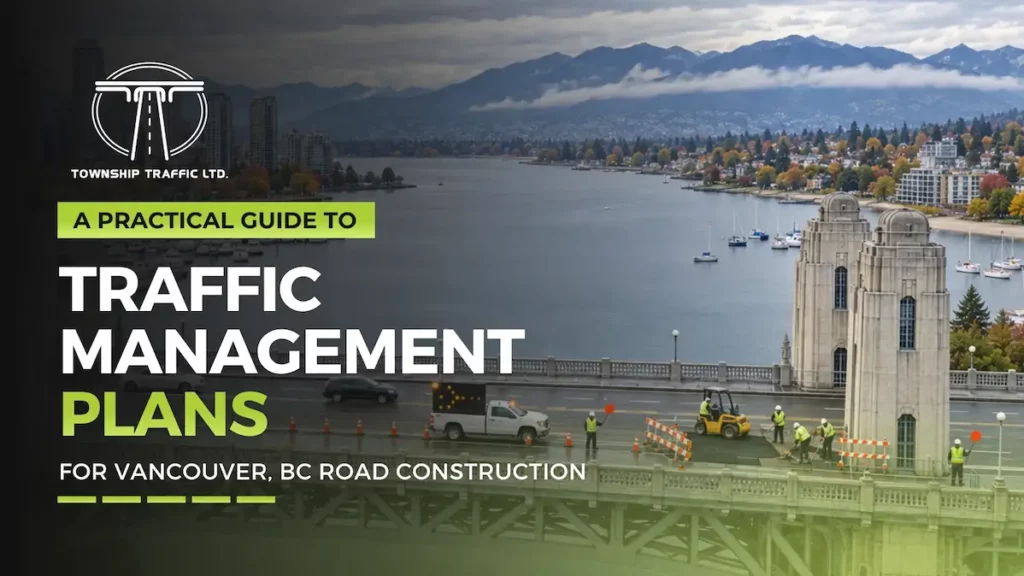
If you’ve driven around Vancouver, you’ve seen it. A lane disappears on Broadway, a detour sign appears near Granville Street, and a line of orange cones stretches down Hastings. In a city this busy and this built-up, road work is a constant, and every project has to fit into streets that were never designed for it.
Behind every well-run work zone is something most drivers never notice: a traffic management plan. If you’re a contractor, developer, utility company, or property manager planning road work in Vancouver, BC, understanding how these plans work can save you time, money, and a lot of stress.
Understanding Traffic Management Plans for Road Work
Think of a traffic management plan (TMP) as the playbook for a work zone. It maps out how everyone using the road, from drivers and transit riders to cyclists and pedestrians, gets safely past or through the area while your crew does its job. It spells out which lanes will close, where detours will send traffic, which signs and barriers go where, and who is accountable for each piece.
A TMP is often mentioned alongside a traffic control plan (TCP), and the two work as a pair. The TMP sets the overall strategy for the project, while the TCP zooms in with detailed drawings of the signs, cones, and lane layouts for each phase of work. An experienced provider will usually prepare both so nothing falls through the cracks.
Whatever the size of the job, the purpose stays the same: protect workers, keep the public safe, and keep traffic moving as smoothly as the project allows.
Why Vancouver Road Construction Needs Careful Traffic Planning
Every city has its own challenges, and Vancouver has a few that make planning especially important.
Dense, busy streets. Downtown and the surrounding neighbourhoods have tight lanes, heavy pedestrian traffic, and very little room to spare. Closing even one lane can ripple through several blocks.
Bridges and major corridors. Routes like the Burrard Bridge, Lions Gate Bridge, Kingsway, and Knight Street carry huge daily volumes. A poorly planned closure near a key crossing can create backups across the region.
Lots of different road users. Vancouver streets are shared by commuters, TransLink buses, delivery trucks, Ubers, cyclists, scooters, and pedestrians. A good plan accounts for all of them, not just cars.
Wet weather. Heavy rain and reduced visibility are part of working in the Lower Mainland and Metro Vancouver area. Plans need to be practical and flexible, with signage and setups that hold up when conditions change.
What a Strong Traffic Management Plan Includes
Whether it’s a one-day lane closure or a multi-month project, a solid plan usually covers:
- Project scope and timeline: what work is happening, where, and when
- Site assessment: traffic volumes, speed limits, sightlines, intersections, and nearby businesses or schools
- Lane closure and detour layouts: clear drawings showing how traffic will be redirected
- Signage and device placement: cones, barricades, arrow boards, and warning signs positioned to the required standards
- Pedestrian and cyclist accommodations: safe, accessible paths through or around the work zone
- Emergency vehicle access: routes that stay open for fire, police, and ambulance services
- Transit and local access considerations: keeping bus routes and business entrances usable where possible
- Flagger and traffic control personnel requirements: how many people are needed and where they’ll be stationed
- Contingency measures: what happens if conditions change, work runs long, or an incident occurs
Permits and Approvals: Don’t Leave Them to the Last Minute
In Vancouver, work in the public right-of-way generally needs approval before it starts, and the traffic management or traffic control plan is a key part of that review. Requirements and lead times can vary depending on the road, the type of work, and how long the closure will last.
Here’s a tip from experience: submit early and submit complete. Incomplete drawings, missing details, or plans that don’t match site conditions are among the most common reasons approvals get delayed. Traffic control in BC also needs to follow recognized provincial standards and WorkSafeBC expectations, so it pays to have someone who knows them well. Always confirm current requirements directly with the City of Vancouver or the relevant authority before finalizing your plan.
Common Mistakes That Cause Delays
After seeing how projects play out, the same mistakes come up again and again:
- Starting the plan too late. Traffic planning should begin during project scheduling, not the week before mobilization.
- Using generic layouts. A plan copied from another job rarely fits the real conditions on the ground.
- Underestimating pedestrians and cyclists. In Vancouver especially, these users are often forgotten until a complaint comes in.
- Skipping communication. Nearby residents and businesses appreciate advance notice, and it cuts down on complaints.
- Not budgeting for traffic control. Flaggers, equipment, and plan preparation are real project costs and belong in the bid from the start.
Why Work with a Professional Traffic Management Provider?
Writing a traffic plan and running it safely on site takes training, experience, and the right equipment. A professional provider helps you:
- Stay compliant with applicable standards and workplace safety expectations
- Reduce risk to workers and the public
- Save time by preparing clear, complete submissions
- Keep projects moving with trained personnel and reliable equipment on site
- Protect your reputation with safe, well-organized work zones
Safety in a work zone is a shared responsibility, and the right partner makes that responsibility much easier to carry.
Need Traffic Control Support? Township Traffic Ltd. Has You Covered
Every road project runs smoother with the right people managing the traffic around it. Township Traffic Ltd. is a traffic management plan and service provider that works with contractors, municipalities, utility crews, and developers to keep work zones safe, organized, and moving, including projects in Vancouver, BC and across the Lower Mainland.
From the first plan drawing to the last cone pickup, Township Traffic Ltd. can support you with:
- Traffic management plan and traffic control plan preparation
- Lane closure and road closure planning
- Certified flaggers and traffic control personnel
- Traffic control setup, monitoring, and removal
- Support with permit submissions and approvals
- Short-term and long-term road construction projects
What sets them apart is a hands-on, no-nonsense approach. The team takes time to understand your project, builds plans around what’s actually happening on site, and keeps communication clear from day one. Whether it’s a quick utility cut or a large-scale road reconstruction, your crew and the public stay protected while your schedule stays on track.
Planning a road construction project in Vancouver and need help with your traffic management plan? Contact Township Traffic Ltd. for a consultation and get your project started on the right track.
Final Thoughts
Road construction is part of keeping Vancouver growing, but it only works when everyone, from the crew on site to the commuter driving past, gets home safely. A well-prepared traffic management plan is the foundation of that safety. Plan early, be thorough, and work with professionals who understand how work zones run in the real world.
FAQs
What is a traffic management plan?
A traffic management plan is a document that outlines how traffic will be safely controlled and redirected around a construction or work zone, including lane closures, detours, signage, and personnel.
Do I need a traffic management plan for road construction in Vancouver, BC?
Most work that affects the public roadway needs some form of traffic control planning and approval. Always confirm requirements for your specific project with the City of Vancouver or the applicable authority.
How early should I start planning traffic control?
As early as possible, ideally while the project schedule is being developed, so approvals don’t hold up your start date.
What’s the difference between a TMP and a TCP?
A TMP is the overall strategy for managing traffic during a project. A TCP is a detailed layout of signs, devices, and lane arrangements for a specific work stage.
Can Township Traffic Ltd. help with traffic control plans and flaggers in Vancouver?
Yes. Township Traffic Ltd. provides traffic management plans along with traffic control services, including trained personnel.
