
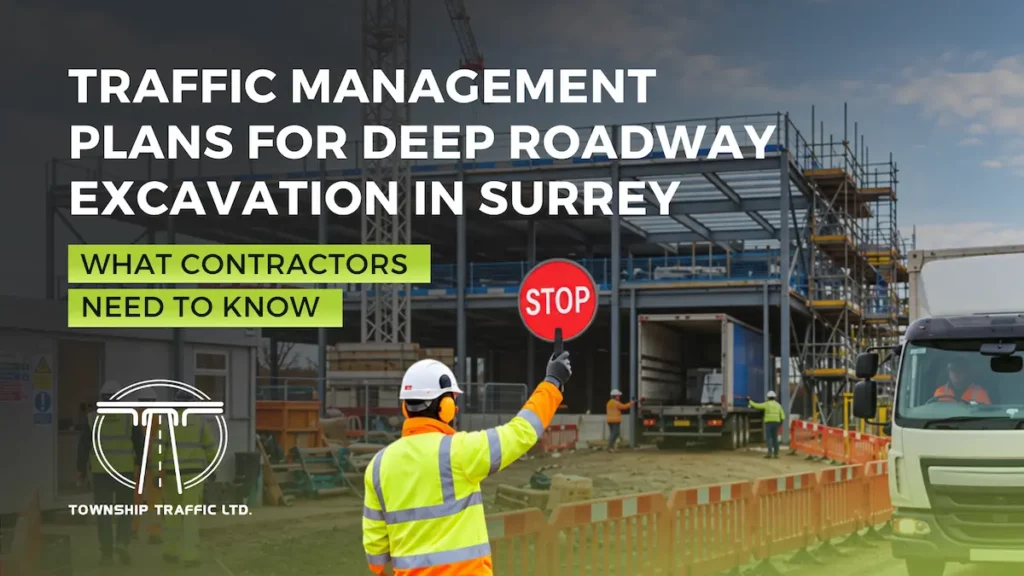
Deep roadway excavation is often needed for sewer upgrades, utility work, drainage projects, and underground infrastructure. In Surrey, these projects can become more challenging when construction takes place close to active roads, sidewalks, driveways, or busy intersections.
Once excavation begins, contractors have to manage more than the work area. Equipment, lane restrictions, temporary barriers, and changing access points can all affect how people move around the site.
That’s why having a clear traffic management plan in Surrey is important. It helps contractors plan how vehicles, pedestrians, cyclists, and construction traffic will move safely around the work zone as the project progresses.
Why Deep Roadway Excavation Requires a Traffic Management Plan
A standard roadwork setup may not be enough for a deep excavation project.
The deeper the excavation becomes, the more space the construction team may need for excavation equipment, spoil piles, shoring systems, trucks, materials, and worker access. If that work takes place close to an active roadway, available space for traffic can quickly become limited.
For example, consider a utility contractor excavating along a busy Surrey road to install a new underground service. The crew may initially be able to maintain two-way traffic. Once excavation expands, however, part of the roadway may need to be occupied by equipment or protected work space. This can require a lane closure, traffic shift, alternating traffic, or another temporary arrangement.
A traffic management plan helps contractors consider these changes before they create problems on site.
Several factors can affect the required traffic setup, including:
- Excavation depth and location
- Available road width
- Number of lanes affected
- Traffic volume and peak travel periods
- Heavy equipment movement
- Nearby intersections
- Pedestrian and cyclist routes
- Driveway and business access
- Emergency vehicle access
- Construction staging and project duration
The traffic control approach should therefore be based on the actual site conditions rather than simply copying a setup used on another project.
What Should Be Included in a Traffic Management Plan?
A traffic management plan in Surrey should clearly explain how vehicles and other road users will move around the construction area. The exact requirements can vary depending on the project, location, road authority, and work conditions, so contractors should verify the applicable requirements before work begins.
Work-Zone Layout
The plan should identify where excavation, equipment, workers, materials, barriers, and traffic will be located.
For deep excavation, this is particularly important because the work zone may need additional space for safe access and protection. The layout should show how much roadway remains available and where vehicles will be expected to travel.
Lane Closures and Traffic Shifts
If excavation affects an existing lane, the plan should show how traffic will be redirected.
Depending on the site, this could involve a temporary lane closure, traffic shift, alternating traffic, or another controlled movement pattern. Planning helps the contractor understand whether the proposed setup will provide enough space for both construction activities and traffic movement.
Detours and Alternate Routes
Some projects may require traffic to be redirected away from the immediate work area.
If a full road closure or significant restriction is necessary, contractors should consider how the detour will affect nearby roads, intersections, businesses, residents, pedestrians, and transit users.
Traffic Control Devices and Signage
Signs, cones, barriers, channelizing devices, and other traffic control equipment help communicate the temporary road layout to drivers and other road users.
Advance warning is particularly important where drivers need to reduce speed, merge, change lanes, or follow a temporary route.
Pedestrian and Cyclist Access
Pedestrians should not be treated as an afterthought.
If excavation affects a sidewalk or roadside pathway, the plan should address how people will safely move through or around the work area. The same applies to cyclists where cycling routes or shared road space are affected.
Emergency Vehicle Access
Contractors should also consider how emergency vehicles can access the area if traffic lanes are restricted.
The appropriate approach will depend on the site and project conditions, but emergency access should be considered during the planning stage rather than after construction begins.
TCP Requirements
Depending on the work zone and traffic conditions, trained traffic control personnel may be required to manage vehicle and pedestrian movement.
The plan should identify where traffic control personnel may be needed and what movements they will manage. Contractors should verify the applicable requirements for their specific project and location.
Work-Zone Entry and Exit Points
Construction vehicles may enter and leave the work area throughout the day. These movements can create additional conflicts with public traffic.
The traffic management plan should consider where trucks, excavators, service vehicles, and other equipment will enter and exit the site and how those movements will be controlled.
Different Construction Phases
Deep excavation rarely remains in exactly the same configuration from beginning to end.
The traffic setup may need to change when excavation moves, utilities are installed, backfilling begins, equipment locations change, or road surfaces are restored. A good plan should account for these stages rather than focusing only on the first day of construction.
Surrey-Specific Considerations for Contractors
Traffic control in Surrey needs to reflect the actual characteristics of the project location.
A deep excavation project on a relatively quiet road may require a very different approach from one near a busy intersection, commercial area, school, transit route, or major arterial road.
Before finalizing a traffic management plan for contractors, consider the surrounding environment.
Road Classification and Traffic Volume
The type of road and the amount of traffic it carries can influence how construction affects road users.
A lane closure on a low-volume local road may create fewer traffic impacts than the same closure on a heavily travelled route. Contractors should assess existing traffic conditions and determine how the proposed work zone will affect normal movement.
Nearby Intersections
Intersections require additional attention because vehicles are already making turning and crossing movements.
If excavation takes place close to an intersection, contractors should consider sightlines, turning movements, queueing, pedestrian crossings, and how temporary traffic controls may affect the intersection.
Businesses and Residences
Road construction can affect more than through traffic.
A work zone may be located beside restaurants, retail stores, offices, apartment buildings, residential driveways, or commercial loading areas. Maintaining reasonable access where possible should be considered during planning.
Transit and Pedestrian Movement
If the project is located near transit stops or common pedestrian routes, temporary construction arrangements may affect how people reach those locations.
Contractors should identify these movements early and incorporate appropriate access arrangements into the traffic control setup.
Deep Excavation and Pedestrian Safety
Deep excavation creates a particular challenge when the work area is close to a sidewalk or pedestrian route.
A pedestrian may see a construction barrier as a simple obstruction, but the traffic management team needs to consider what happens next. If the normal sidewalk is unavailable, where will pedestrians go? Can they safely cross the road? Is the alternate route clearly identified? Does the temporary route remain accessible throughout the construction phase?
For example, a sewer replacement project may begin along the edge of a Surrey roadway with the sidewalk initially remaining open. As excavation progresses, the work area may expand and require the sidewalk to be closed.
If that change was not considered in advance, the contractor may have to make a last-minute adjustment.
A better approach is to identify potential pedestrian impacts during planning and establish how access will be maintained or redirected as the work progresses.
The same principle applies to driveways, building entrances, and other access points affected by excavation.
Common Mistakes Contractors Should Avoid
Planning Traffic Control Too Late
Traffic management should be considered during project planning, not immediately before excavation begins.
Late planning can make it harder to identify conflicts, arrange the required traffic control resources, or develop a practical work-zone layout.
Using a Generic Traffic Setup
Every roadway excavation project has different conditions.
Copying a traffic setup from another location without considering road width, traffic volume, pedestrian movement, nearby intersections, and construction staging can create problems.
Failing to Account for Pedestrians
Drivers are often the first consideration in road construction planning, but pedestrians also need a clear and safe route.
If a sidewalk or crossing is affected, the alternative should be considered before the work begins.
Poor Communication Between Teams
Construction crews and traffic control personnel need to understand how the site will operate.
If excavation progresses faster than expected or equipment needs to be relocated, the traffic control setup may need to change. Clear communication helps the teams respond to those changes.
Not Planning for Excavation Phases
A deep excavation project can look very different during excavation, utility installation, backfilling, and restoration.
Planning only for the initial phase can leave contractors unprepared for later changes.
Inadequate Advance Warning
Drivers need enough information and time to understand temporary traffic conditions.
Poorly positioned or insufficient warning can make lane changes, merges, and temporary route changes more difficult for road users.
When Should Contractors Bring in a Traffic Control Professional?
Professional traffic control support can be helpful when a project involves deep excavation, lane closures, high traffic volumes, busy intersections, or pedestrian impacts.
Bringing a traffic control team in early can help contractors plan the work zone, manage changing traffic conditions, and address potential access or safety issues before construction begins.
For Surrey projects, Township Traffic provides traffic control and traffic management services to help contractors manage lane closures, work zones, pedestrian movement, and changing site conditions.
Final Takeaway
Deep roadway excavation requires careful planning to keep traffic, pedestrians, and construction activities moving safely around the work zone. A well-planned traffic management plan in Surrey can help contractors prepare for lane restrictions, access changes, and different stages of construction.
If you are planning excavation or roadwork in Surrey, contact us for professional traffic control support based on your project and site requirements.
