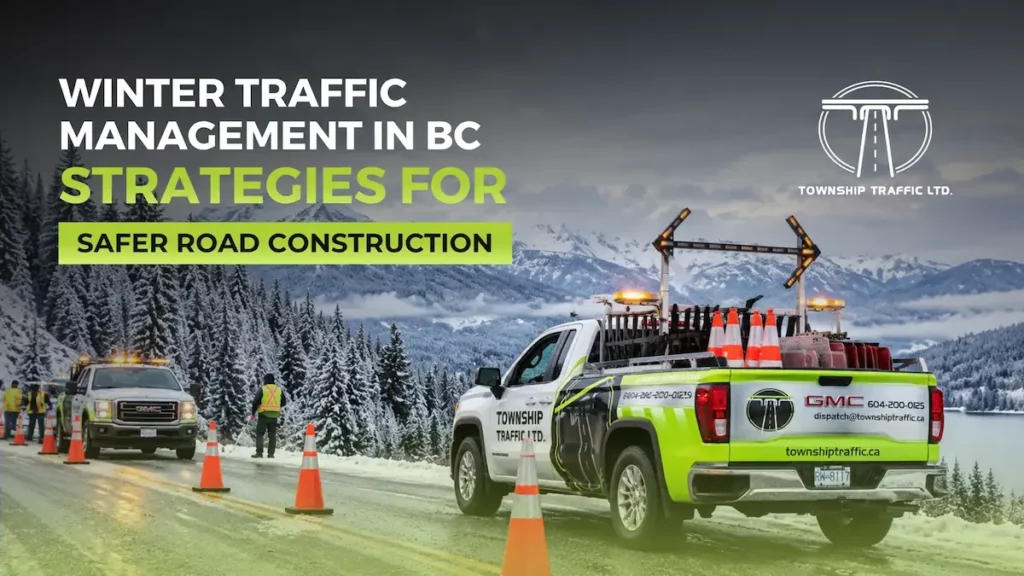
Anyone who works or drives around the Lower Mainland knows the drill. The rain settles in around November, the daylight disappears by late afternoon, and a cold snap can turn a wet road into black ice overnight. Road work doesn’t pause for any of it. Utility crews, municipalities and contractors keep going through rain, snow and freezing fog because the infrastructure still needs to be maintained.
That’s exactly why winter traffic management in BC isn’t a seasonal add-on. From November to March, it’s the backbone of road construction safety.
At Township Traffic, we provide BCCSA-certified traffic control across Langley, Surrey, Vancouver, the Fraser Valley, and Metro Vancouver. Here’s how experienced teams keep crews and drivers safe when winter conditions move in.
Why Winter Makes Road Work Zones Riskier
A work zone that feels routine in July can be a very different place in January. Shorter days, heavy rain, freezing fog and black ice all cut visibility and stretch out stopping distances. Even careful drivers can be caught off guard by a sudden lane shift or a line of stopped vehicles.
Crews feel it too. Cold, wet conditions slow reaction times, and slippery footing makes it harder to step aside when a vehicle approaches too quickly. A summer plan simply doesn’t translate to winter, and copying it over is one of the easiest mistakes to make.
Start With a Winter-Ready Traffic Management Plan
Every safe work zone starts on paper. A solid traffic management plan shows how vehicles, cyclists, and pedestrians will get through or around your site. In winter, it needs a few extra layers:
- Longer tapers and buffer zones, so drivers have more room to slow down on slick pavement.
- Earlier warning signs, placed far enough back for safe reaction at reduced speeds.
- Detour routes that take snow-clearing priorities and icy hills into account.
- Contingency steps for sudden storms, including when to pause work or reconfigure the site.
In British Columbia, plans should follow provincial standards, including the Ministry of Transportation and Transit’s Traffic Control Manual for Work on Roadways, WorkSafeBC requirements and any municipal permit conditions in Langley, Surrey or wherever your project sits. A qualified provider can prepare and adjust plans quickly, which matters when the forecast changes overnight. You can learn more about our traffic management plan service.
Make Visibility the Top Priority
If drivers can’t see the work zone, nothing else matters. Winter asks more of your signs and equipment:
- Clean, reflective signs. Slush, road salt and mud cover sign faces fast, so check and wipe them regularly.
- High-visibility apparel. Crews should wear Class 3 gear with reflective striping, especially at dawn, dusk and on night shifts.
- Good lighting. Illuminated arrow boards, flashing beacons and portable light towers help drivers read the site from a distance.
- Secured devices. Cones, barrels and barriers need to be weighted or anchored so wind, snow and passing traffic don’t push them out of place.
Many winter projects run into the evening or overnight, and in those hours, lighting and reflectivity are often what separate a smooth shift from a near miss.
Rely on Trained Traffic Control Persons
Signs and technology help, but people are what make a work zone safe. Certified traffic control persons give drivers clear, real-time direction and can adjust the moment conditions change. In cold weather, that training counts for even more.
Flaggers working through a BC winter should be:
- BCCSA-certified and up to date on current provincial standards.
- Positioned with a safe escape route, even when snowbanks or ice limit space.
- Rotated regularly to prevent fatigue and cold-related stress.
- Dressed for the cold without sacrificing visibility.
A flagger who understands stopping distances on wet or icy roads can run a safer sequence of stops and releases. See how our traffic control persons support crews across Metro Vancouver and the Fraser Valley all year.
Plan Lane Closures Around Winter Conditions
Lane closures are some of the most sensitive moments in any road project, and winter adds complexity. Frost, ice and standing water change how quickly a closure can go up or come down, and heavy rain can hide pavement markings, making shifts harder for drivers to follow.
A few habits help:
- Schedule closures in lower-traffic windows whenever possible.
- Allow extra setup and takedown time in cold or wet weather.
- Use truck-mounted attenuators and barriers where speeds and traffic volumes call for added protection.
- Keep the closure only as long as needed, and restore full lane access promptly.
Our lane closure services are available 24 hours a day, seven days a week, so Langley and Surrey projects can take advantage of tight weather windows without cutting corners on safety.
Watch the Weather and Adapt as You Go
Conditions on the Lower Mainland can change within hours. Supervisors should check forecasts and road reports before every shift, then reassess throughout the day. Clear triggers, such as freezing rain, heavy snowfall or poor visibility, make it easier to decide when to change staffing, add devices, or stop work for a while.
Daily site briefings help too. A quick conversation about expected conditions, escape routes, and communication signals can prevent a lot of confusion when a storm rolls in.
Coordinate With Everyone Who Shares the Road
Winter work zones rarely operate in isolation. Municipalities, utility providers, snow-clearing contractors, transit agencies and emergency services all depend on predictable traffic patterns. Communicating early about closures, detours and schedules helps everyone plan, and advance notices and variable message signs keep the public in the loop.
Work With a Local Team That Knows BC Winters
Safer winter road construction comes down to four things: preparation, visibility, trained people and the willingness to adapt. Contractors who treat these as non-negotiable protect their crews, avoid costly delays and keep communities moving.
Township Traffic is a locally based, BCCSA-certified traffic control company serving Langley, Surrey, Vancouver, the Fraser Valley and Metro Vancouver. Whether you need a customized traffic management plan, experienced flaggers or round-the-clock lane closures, we’re ready to help.
Planning a winter project? Contact our team today for an on-site evaluation and quote.
