
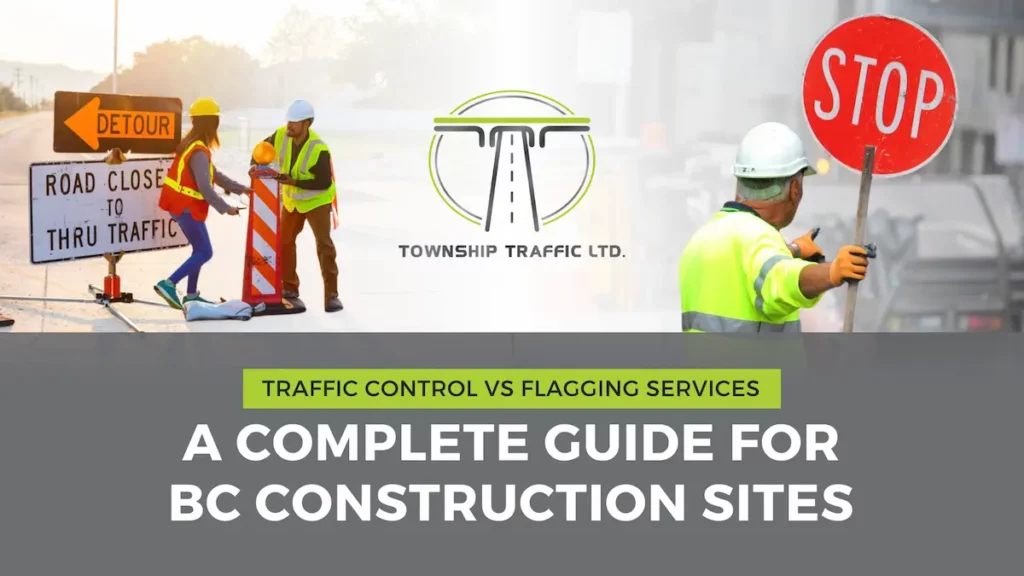
Construction projects in British Columbia (BC) often disrupt normal traffic patterns, including lane closures, temporary detours, and narrowed roadways near active work sites. Effective construction traffic management in BC is crucial for maintaining BC road safety, protecting workers, and reducing congestion for drivers and pedestrians. Without proper planning, even short-term projects at BC construction sites can lead to accidents, traffic delays, and increased safety risks for the public and construction crews.
Two essential services ensure safe and well-organized work zones: Traffic Control in BC and Flagging Services in BC. While closely related, each service has a unique role in maintaining safe work zones in BC. Traffic Control in BC handles the overall planning, signage, and traffic flow management, whereas Flagging Services in BC provides on-site direction and communication with drivers. Together, these services help create compliant, safe, and efficient construction traffic management in BC, keeping roads in British Columbia secure for everyone.
What Is Traffic Control in BC Construction?
Traffic Control in BC involves the strategic planning, implementation, and management of vehicle and pedestrian movement around construction sites. Its main objective is to maintain smooth traffic flow while ensuring the safety of both construction workers and the public. Effective traffic control not only reduces the risk of accidents but also minimizes delays and ensures compliance with provincial safety regulations.
Key services provided under Traffic Control in BC include:
- Lane closures and temporary detours – Safely redirecting vehicles around construction zones to prevent congestion and maintain access.
- Traffic signs, cones, and barricades – Properly placed signage and barriers guide drivers and pedestrians safely through work zones.
- Traffic Management Plans (TMPs) – Customized plans detailing traffic flow, detours, pedestrian routes, and safety protocols for each project.
- Compliance with WorkSafeBC and BC Ministry of Transportation standards – Ensuring all traffic control measures meet legal and safety requirements.
Working with a professional traffic control company in BC guarantees that these measures are implemented correctly and adjusted as site conditions change. This not only reduces disruptions but also helps maintain safe, organized roads for everyone traveling through BC construction sites.
What Are Flagging Services in BC and Why Are They Essential for Construction Safety?
Have you ever wondered how traffic stays safe in high-risk construction zones where signs and cones aren’t enough? Flagging Services in BC plays a critical role in maintaining safety on roads during construction projects. Unlike general Traffic Control BC, flagging services involve human supervision of traffic at key points, ensuring vehicles move safely around worksites.
Certified flaggers, also known as Traffic Control Persons (TCPs), use STOP/SLOW paddles, flags, and hand signals to guide drivers through areas where traffic flow is restricted or hazardous. Their expertise helps prevent accidents, reduce congestion, and protect both workers and the public.
Key Roles of Flaggers in BC Construction
- Direct vehicles safely through single-lane or high-traffic zones: Ensures smooth movement even in challenging worksite conditions.
- Coordinate with other flaggers and construction crews: Maintains efficient traffic flow and communication across the site.
- Protect worker and public safety: Immediate intervention reduces the risk of accidents.
- Follow BC safety regulations and protocols: Compliance with WorkSafeBC and Ministry of Transportation standards is mandatory.
Flaggers are especially vital in areas where automated traffic signals, static signage, or lane markings alone cannot maintain safety. By hiring professional flagging services in BC, construction projects can operate efficiently while keeping roads safe for everyone.
Traffic Control vs Flagging in BC: Understanding the Key Differences
When it comes to construction and roadwork projects in British Columbia, understanding the distinction between traffic control services and flagging services is essential for safety and compliance. Both play critical roles, but their scope, focus, and requirements differ.
| Aspect | Traffic Control Services in BC | Flagging Services in BC |
| Scope | Comprehensive planning and management of traffic flow across a project site | On-site, real-time control of vehicles during construction or maintenance |
| Focus | Implementation of signage, lane closures, detours, and traffic management plans (TMPs) | Directing traffic manually using trained personnel with STOP/SLOW paddles |
| Components | Traffic cones, barricades, TMPs, and necessary permits | Certified flaggers actively guiding vehicles for safety |
| Requirement | Mandatory for all major construction and infrastructure projects | Required when manual supervision of traffic is necessary, such as single-lane alternations |
| Example | Highway lane shifts, multi-lane construction, and complex roadwork | Local road maintenance, single-lane closures, and utility work on smaller streets |
How Traffic Control and Flagging Work Together in BC
- Strategic Pre-Project Planning:
Professional traffic control companies in BC create detailed Traffic Management Plans (TMPs) to maintain safe and efficient vehicle movement throughout the project lifecycle. - Proper Traffic Control Setup:
Clearly visible signs, cones, barricades, and lane-control devices are installed to direct motorists and protect active construction zones. - Certified Flagger Deployment:
Trained and certified flaggers in BC are positioned at high-risk and high-traffic points to control traffic where automated systems are not sufficient. - Live Traffic Monitoring & Adjustments:
Flaggers stay in constant communication with site crews, allowing immediate adjustments to traffic flow as site conditions change. - Safe Project Completion:
Once construction is finished, all temporary traffic control measures are removed, and normal traffic patterns are safely restored.
This coordinated approach between traffic control services and flagging services in British Columbia ensures regulatory compliance, minimizes delays, and maximizes safety for both workers and drivers.
Why BC Construction Projects Need Professional Traffic Control and Flagging
- Enhanced Worker & Public Safety:
Certified traffic control personnel significantly reduce the risk of collisions and worksite accidents. - Full Regulatory Compliance:
Adhering to BC traffic safety standards and regulations helps avoid fines, delays, and legal exposure. - Improved Traffic Efficiency:
Proper planning and on-site flagging minimize congestion and keep vehicles moving smoothly. - Increased Public Confidence:
Drivers feel safer navigating construction zones when professionals clearly manage traffic.
When Are Flagging Services Required in British Columbia?
Flagging services in BC are typically required when:
- Traffic must alternate through a single open lane
- Visibility is limited, or the road layout is complex
- Heavy construction equipment operates near live traffic
- Automated signals or signage cannot safely control traffic flow
In these situations, professional flagging services in BC play a critical role in maintaining safety while keeping construction projects efficient and on schedule.
Conclusion
For construction and roadwork projects across British Columbia, both traffic control services in BC and flagging services in BC play essential roles in maintaining safety and efficiency. Traffic control establishes the overall structure of traffic movement through professionally designed signage, cones, barricades, lane closures, and approved Traffic Management Plans (TMPs). This strategic setup ensures compliance with provincial regulations and creates a safe framework for both workers and road users.
At the same time, certified flaggers in BC provide hands-on, real-time traffic direction at critical points where vehicles interact closely with active work zones. When combined with professional traffic planning, this on-site supervision ensures safe vehicle movement in high-risk construction areas.
By working together, traffic control and flagging services help reduce congestion, prevent accidents, protect construction crews, and keep motorists moving safely through or around job sites. Local providers such as Township Traffic Ltd., a trusted traffic control service in British Columbia, play a key role in delivering effective construction traffic management in BC through experienced crews, compliant setups, and responsive on-site support.
