
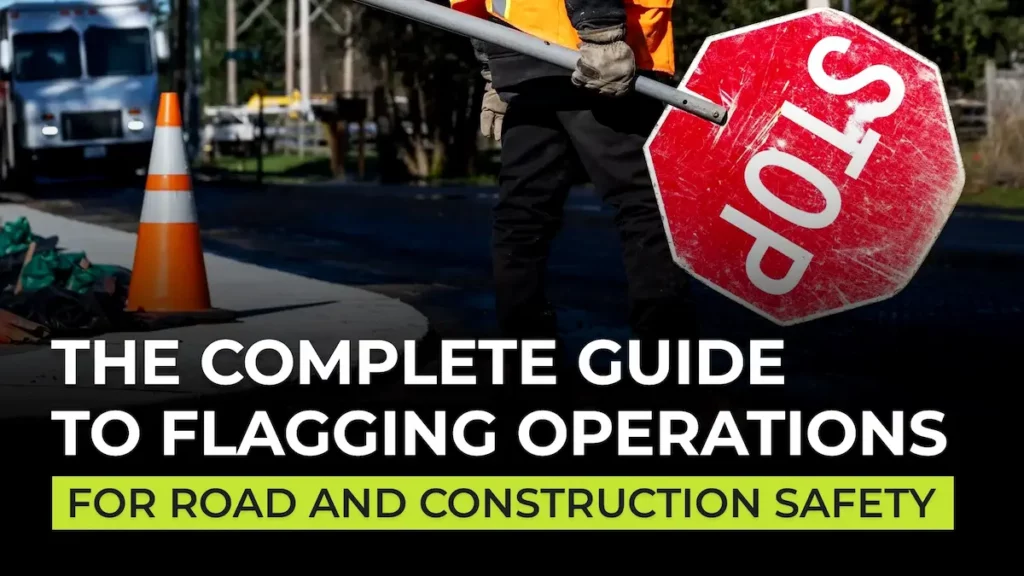
Have you ever wondered who keeps you safe when driving through construction zones?
Professional flaggers are the critical line of defence between chaos and safety on our roadways. Every day, thousands of lives depend on skilled flagging operations to navigate work zones safely, yet many underestimate the specialized training and expertise these traffic control professionals require.
Flaggers play a vital role in directing traffic, controlling vehicle flow, and preventing accidents in high-risk construction areas. This complete guide covers everything you need to know about flagging operations – from essential training requirements and OSHA compliance standards to best practices and safety equipment. Whether you’re a construction manager, safety coordinator, or aspiring flagger, understanding proper flagging protocols can mean the difference between a secure worksite and a preventable accident.
What Are Flagging Operations?
Flagging operations involve the use of trained personnel, known as flaggers, to manage traffic around construction zones, road maintenance projects, and other areas where normal traffic patterns are disrupted. Flaggers use signs, hand signals, flags, and traffic control devices to guide drivers safely through or around work zones.
Flagging is not just about stopping or moving traffic; it is about communicating clearly with motorists, ensuring smooth vehicle flow, and preventing accidents in high-risk areas.
Importance of Flagging Operations
Flagging operations are crucial for several reasons:
- Worker Safety: Construction zones are high-risk areas. Proper flagging ensures workers can perform their tasks without the threat of accidents caused by uncontrolled traffic.
- Driver Safety: Clear instructions prevent confusion and reduce the risk of collisions near construction or maintenance sites.
- Regulatory Compliance: Most countries require flaggers and traffic control plans for certain types of construction projects. Compliance with regulations avoids penalties and legal liabilities.
- Efficient Traffic Flow: Flagging helps maintain traffic movement, reducing congestion and frustration for drivers passing through work zones.
Flagger Roles and Responsibilities
A flagger’s responsibilities go beyond holding a sign. Key duties include:
- Directing Traffic: Ensuring vehicles move safely through work zones using hand signals, flags, and paddle signs.
- Communicating Effectively: Using radios or gestures to coordinate with other flaggers or site supervisors.
- Monitoring Work Zone Conditions: Identifying hazards such as uneven surfaces, debris, or equipment and notifying the team.
- Implementing Safety Measures: Ensuring all traffic control devices, signs, and barriers are in place according to local regulations.
Essential Flagging Equipment
To perform flagging operations effectively, the following equipment is commonly used:
- Stop/Slow Paddles: Clearly indicate whether vehicles should stop or proceed slowly.
- High-Visibility Clothing: Vests, jackets, or uniforms with reflective materials for maximum visibility.
- Traffic Cones and Barriers: Helps define lanes and guide vehicles safely around hazards.
- Flags: Brightly colored flags to signal drivers from a distance.
- Radios or Communication Devices: For coordination between multiple flaggers in large work zones.
Best Practices for Safe Flagging Operations
Implementing the following practices ensures flagging operations are effective and safe:
- Proper Training: Flaggers must complete certified training courses to understand traffic patterns, hand signals, and safety regulations.
- Positioning: Stand in a visible area where approaching drivers can see you from a safe distance.
- Clear Signaling: Use slow, deliberate movements to communicate clearly with drivers.
- Regular Equipment Checks: Inspect flags, paddles, cones, and clothing to ensure they are in good condition.
- Stay Alert: Flaggers must remain focused and aware of all traffic, site changes, and weather conditions.
Flagging Operations and Regulatory Standards
In most regions, flagging operations are governed by traffic management and occupational safety authorities. For example:
- Manual on Uniform Traffic Control Devices (MUTCD): Provides standards for traffic control in work zones.
- Occupational Health and Safety Guidelines: Outline requirements for worker training, personal protective equipment (PPE), and flagger responsibilities.
Adhering to these standards not only ensures safety but also helps construction companies avoid fines and legal complications.
Common Challenges in Flagging Operations
While flagging operations are essential, they come with challenges:
- Unpredictable Driver Behavior: Not all drivers follow instructions carefully.
- High-Speed Roads: Working on highways requires extra caution due to faster-moving traffic.
- Weather Conditions: Rain, snow, or fog can reduce visibility, making flagging more dangerous.
- Equipment Failures: Damaged or missing traffic control devices can lead to accidents.
Proper training, safety gear, and contingency plans help mitigate these risks.
Conclusion
Flagging operations are the backbone of roadway and construction site safety, protecting workers, drivers, and pedestrians while maintaining efficient traffic flow in high-risk environments. Investing in professionally trained flaggers, high-quality safety equipment, and strict adherence to regulatory standards isn’t optional – it’s essential for preventing accidents and ensuring project success.
For construction companies, municipalities, and contractors throughout British Columbia and across Canada, partnering with certified traffic control specialists makes all the difference. Township Traffic Ltd provides comprehensive flagging operations and traffic management solutions, delivering trained, certified personnel equipped with industry-leading safety gear. With expertise in OSHA compliance, provincial regulations, and proven safety protocols, Township Traffic Ltd ensures your work zones meet the highest standards of protection and efficiency. Don’t compromise on safety – choose a trusted partner committed to keeping your projects compliant, your workers protected, and your timelines on track.
