
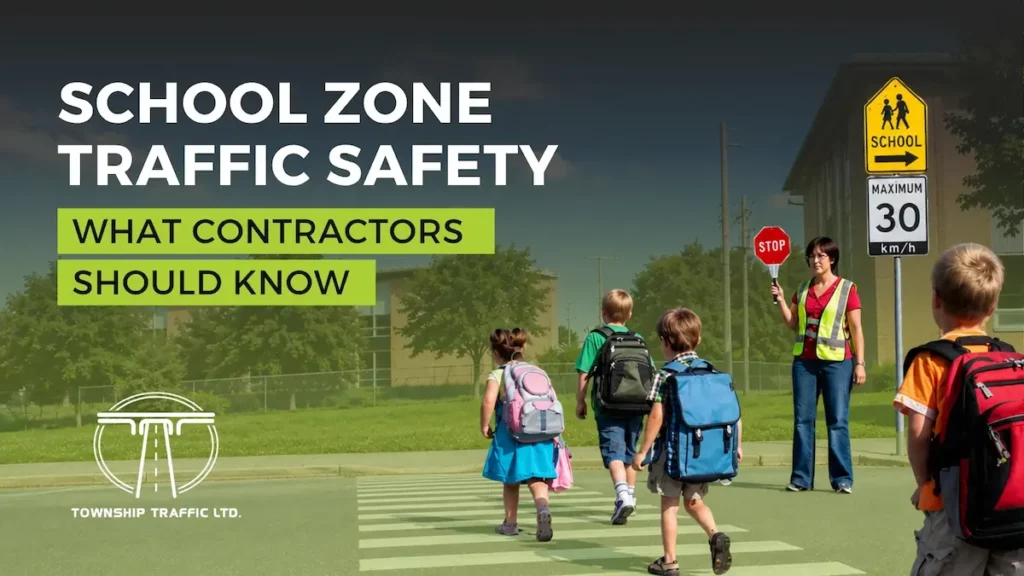
Every school day in British Columbia, children navigate busy roads, cross intersections, and move through crowded drop-off and pick-up areas. With school buses, parked vehicles, pedestrians, and heavy traffic all sharing the same space, even a small distraction can create a serious safety concern. When construction, road work, paving, or utility projects are added to the area, managing traffic around a school becomes even more important.
School zone traffic safety is not just a concern at the start of the school year. It requires ongoing attention from parents, drivers, school staff, contractors, and project managers throughout the year. Clear traffic control, proper signage, safe pedestrian routes, and responsible driving can all help create safer school zones for students and everyone on the road.
In this guide, we’ll look at the most common school zone safety risks, practical steps parents and drivers can take to protect children, and what contractors should consider when planning traffic control near schools.
Understanding the Importance of School Zone Safety
Children can be less predictable and harder for drivers to see than adults. They may become distracted or have difficulty judging vehicle speed and distance, making school zone traffic safety especially important.
The busiest and riskiest times are usually during school drop-off and pick-up. Traffic increases, school buses stop, parents may park or wait near the school, and children cross streets on foot or by bike. Construction, lane closures, or other road work can make these conditions even more challenging.
Proper school zone traffic control, clear signs, safe pedestrian routes, and careful driving can help reduce these risks and create a safer environment for students, parents, and road users.
Common Traffic Hazards Around School Zones
Some of the most frequent hazards reported around BC school zones include:
- Illegal or unsafe parking, including double-parking and stopping in crosswalks during drop-off
- Speeding drivers who don’t adjust for reduced school zone speed limits
- Poor sightlines caused by parked vehicles, buses, or temporary signage
- Distracted driving, particularly during rushed morning drop-offs
- Construction or utility work introducing detours, lane shifts, or equipment near pedestrian routes
- Inconsistent signage or missing traffic control devices during temporary road changes
Any one of these on its own is manageable. Combined, they create the conditions where preventable collisions happen.
How to Improve School Zone Safety
Improving traffic safety around schools starts with everyday driver behaviour:
- Slow down and obey posted school zone speed limits, especially during morning and afternoon peak periods
- Use designated drop-off and pick-up zones rather than double-parking near the entrance
- Avoid blocking crosswalks, driveways, or bus loading areas
- Stay alert for crossing guards and follow their direction, even if it means a short wait
- Model safe pedestrian habits for children, including looking both ways and crossing at marked locations
- Report persistent hazards like a missing sign or an unsafe intersection to the school or local municipality
None of this requires special equipment or training, just consistent attention during the highest-risk minutes of the day.
How Contractors Can Manage Traffic Near Schools
Construction near school zones raises the stakes considerably. A lane closure, excavation, or paving project that would be routine on a quiet residential street becomes a much bigger liability question next to an elementary school.
Contractors and project managers working near schools should plan around a few key questions:
- What are the school’s peak pedestrian hours, and can the most disruptive work be scheduled outside them?
- Will the project affect a designated school walking route, crosswalk, or bus stop?
- Are detours clearly signed for both vehicles and pedestrians, including students walking or biking?
- Has the municipality been notified, and are any required permits in place before work starts?
Coordinating directly with the school and local authorities before mobilizing equipment is one of the simplest ways to avoid delays, complaints, or safety incidents once work is underway.
The Role of Traffic Control in School Zones
Professional traffic control near schools does more than direct vehicles it protects a specific, high-risk population of pedestrians who may not fully understand construction signage or worksite boundaries. A trained traffic control person can adjust to real-time conditions in a way that static signage alone cannot: waving a hesitant child across safely, holding traffic during a bus stop, or flagging an unexpected hazard.
This is where school zone traffic control differs meaningfully from general worksite traffic management. It calls for a plan that accounts for foot traffic patterns, bus schedules, and the specific behaviour of young pedestrians, not just vehicle flow.
Important School Zone Traffic Safety Measures
A solid school zone traffic control plan typically includes:
- Clear, compliant school zone traffic signs positioned with adequate driver sightlines
- Marked or temporary crosswalks where students are expected to cross
- Certified traffic control personnel during high-volume construction or event periods
- Speed reduction measures appropriate to the site, in line with local requirements
- Physical barriers or delineators separating work areas from pedestrian routes
- A communication plan with the school so staff, parents, and bus drivers know what to expect
How Traffic Control Plans Help Protect Students and Road Users
A written, site-specific traffic control plan gives everyone involved the contractor, the school, and the municipality a shared reference for how traffic and pedestrians will move safely during a project. It typically maps out signage placement, detour routes, staffing levels, and timing around school hours.
Beyond the safety benefit, a documented plan is also what municipalities generally expect to see before approving work near a school property. Going in without one often means delays, rejected permits, or work stoppages once a problem is flagged on site.
When to Hire a Professional Traffic Control Company
Not every job near a school requires a full traffic management crew, but several situations call for professional support:
- Construction, utility, or paving work within or adjacent to a school zone
- Events that temporarily close roads or sidewalks near a school
- Projects affecting a known school walking route or bus stop
- Any work where pedestrian and vehicle paths will cross during school hours
A traffic control company brings certified personnel, proper signage, and experience building traffic control plans that hold up to municipal review, reducing both safety risk and project delays. Township Traffic’s traffic control services are built around exactly these situations, with crews trained to work safely around schools, families, and busy pedestrian areas across the Fraser Valley and Metro Vancouver.
School zone traffic safety depends on the same thing every day: people paying attention during the windows when it matters most. For parents and drivers, that means slowing down and following the rules built to protect kids. For contractors and businesses working near schools, it means planning with a proper traffic control plan rather than treating it as an afterthought.
FAQs
What is considered a school zone in BC?
A school zone is typically the signed area surrounding a school where reduced speed limits and specific traffic rules apply, usually in effect during school arrival and dismissal hours. The local municipality sets exact boundaries and hours.
Do school zone speed limits apply on weekends and holidays?
Generally, school zone speed limits apply only during posted times on school days. Drivers should check local signage, as rules can vary by municipality.
What does a traffic control person do near a school?
A traffic control person manages vehicle and pedestrian movement in real time, directing traffic around a worksite while helping students cross safely at high-risk points.
When should a business hire a professional traffic control company?
Any time a project affects vehicle or pedestrian flow near a school, event, or busy public area, professional traffic control reduces liability and helps the project stay compliant with local requirements.
